
NURS FPX 4025 Assessment 1 Analyzing a Research Paper
Student Name
Capella University
NURS-FPX4025 Research and Evidence-Based Decision Making
Professor’s Name
Due Date
Abstract
Figure 01
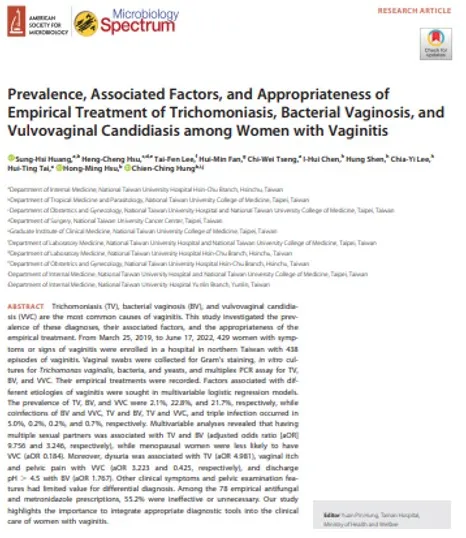
Abstract of Article
Keywords
bacterial vaginosis, diagnostics, empirical treatment, trichomoniasis, vaginitis, vulvovaginal candidiasis.
References
Huang, S.-H., Hsu, H.-C., Lee, T.-F., Fan, H.-M., Tseng, C.-W., Chen, I-Hui., Shen, H., Lee, C.-Y., Tai, H.-T., Hsu, H.-M., & Hung, C.-C. (2023). Prevalence, Associated factors, and appropriateness of empirical treatment of Trichomoniasis, Bacterial Vaginosis, and Vulvovaginal Candidiasis among women with Vaginitis. Microbiology Spectrum, 11(3). https://doi.org/10.1128/spectrum.00161-23
DOI
https://doi.org/10.1128/spectrum.00161-23
Published Date
April 13, 2023
Figure 02
Sentinel U Patient Screenshot
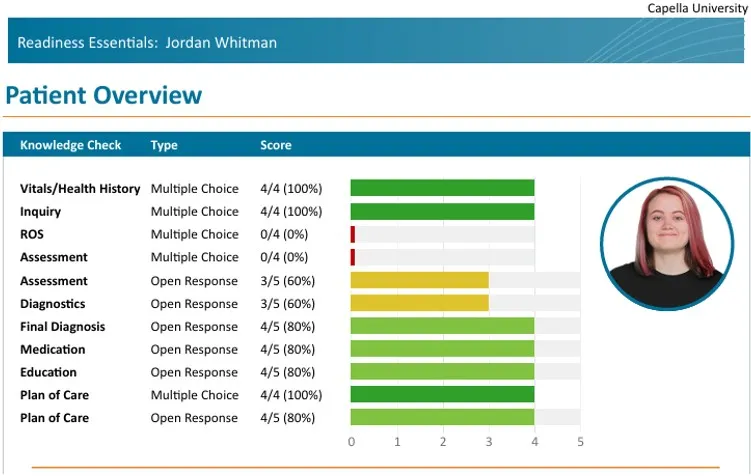
Table 01
Article Description
Criterion | Question |
1 | Summary of the Type of Study: The article was a quantitative cross-sectional observational research article, conducted by Huang et al. (2023) that investigates the prevalence, risk factors and suitability of the empiric therapy of the Trichomonas vaginalis, bacterial vaginosis, and the vulvovaginal candidiasis in symptomatic women. The comparison was done on the basis of gathered and examined clinical information of 429 patients, according to which lab-based approaches to diagnostics, such as vaginal cultures and multiplex polymerase chain reaction (PCR) test, were implemented. This research falls into the Level III evidence category since it is well-constructed non-experimental research, which entails a case-control or a cross-sectional inquiry. This categorization could be explained by the methodology design of the study; it is not a randomized or intervention-based study, but an observational study that will collect data to make conclusions regarding patterns and correlations. The quality of the scientific aspect of the research is also guaranteed by the nature of validated diagnostic tools applied, the statistical model of logistic regression, and publication in a peer-reviewed journal. These factors contribute to making it more plausible and clinically viable, especially to educate the evidence-based nursing practices on the issues of diagnosing and treating Trichomonas vaginalis infection. |
2 | Credibility of Article: The credibility of Huang et al. (2023) can be considered very impressive according to some key points. First, it is a peer-reviewed article as it has been published in a reputable journal, Microbiology Spectrum, which is operated by the American Society of Microbiology. The peer review will ensure that the study is critically reviewed by experts in the field of subject matter to certify its scientific validity and reliability. In addition, the sample of 429 symptomatic women utilized in the research is highly defined and justifies the statistical significance. The authors depend on objective lab-grounded diagnostic tests, which can improve the validity of the results, which include vaginal cultures and multiplex PCR. The implementation of multivariable logistic regression is well explained, and the use of the multivariate logistic regression enables the verification of the analysis, also in the aspect of removing the confounding variables. Moreover, they are also authored by employees of the established medical organizations, and the open researcher and contributor ID (ORCID) profiles are mentioned, which implies the existence of transparency and academic responsibility. All these considerations render the article credible and applicable in informing clinical practice and nursing education. |
3 | Importance of Content: Huang et al. (2023) have concluded that the incidence of Trichomonas vaginalis among symptomatic women with vaginitis were 2.1%, and several important clinical trends were observed. This study discovered that many cases of trichomoniasis were co-infected with another disorder, such as bacterial vaginosis and vulvovaginal candidiasis. Therefore, it was impossible to make a clinical diagnosis of the condition based on the symptoms only. Among the most prevalent risk factors of Trichomonas vaginalis, one can distinguish such factors as multiple sexual partners, dysuria, or a recent history of unprotected intercourse, and all these factors directly relate to the case of Jordan Whitman in the Sentinel U simulation. The study was the greatest when it indicated that 55.2 percent of the empiric treatments applied before lab testing were improper, and the application of medicines was incorrect or even unsuccessful. This underscores the need for urgent laboratory confirmation done by PCR or cultures before the commencement of treatment. The implications on the nursing practice are grave because the researchers point to the necessity of making the proper diagnosis, educating patients about safe sex, and preventing the use of empiric treatment in the absence of any diagnostic assistance. The fact justifies the applicability of evidence-based protocols in managing Trichomonas vaginalis, especially among teenagers. |
4 | Ability to Apply Content to the Workplace: The study by Huang et al. (2023) is highly generalizable both in the context of adolescent and young adult populations in outpatient and school-based clinics as well as in the community health setting when it comes to sexually transmitted diseases, including Trichomonas vaginalis, which is increasingly prevalent among adolescents and young adults. The clinical characteristics, the disease diagnosis issues, and the trend of treatment would not be confined to the Taiwan area because they would be included in the international trends in sexual health. As an illustration, a number of the risk factors identified include multiple sexual partners, unprotected sex, and insufficient screening for sexually transmitted diseases (STIs), and this is prevalent among teenage patients, as is the case with Jordan Whitman, who is a fictional character in the Sentinel U simulation and is aged 17 years. Nurses can also apply these findings in a real clinical environment, especially in the primary care or teen clinic, to utilize some kind of structured assessment, encourage lab-based diagnostics, and reinstate the instruction on safe sex and patient compliance. In addition, the study is concerned with the danger of the empiric intervention abuse that is able to shape the policies of antibiotic medication and quality enhancement initiatives in healthcare facilities. When introducing care strategies based on the evidence of the study, nurses will be able to raise the rates of accuracy in diagnosis, reduce the number of recurrent infections, and enhance the overall results of sexual health among different groups of patients. |
Analyzing a Research Paper
Clinical interest of the research article by Huang et al. (2023) resides in an objectively important and professionally valuable analysis of the prevalence and management problems of Trichomonas vaginalis among some groups of women with manifestations of signs. The paper observes the challenges of diagnosing vaginitis through the quantitative and cross-sectional method of study due to the overlapping nature of the symptoms, which often results in its empiric treatment, which is still inaccurate. Being a nursing student who evaluates this article in the context of Trichomonas vaginalis as a problem presented in the case study of patient Jordan Whitman of the Sentinel U, the evidence does contribute directly to the care improvement of patients. Besides scientific rigour, PCR and utilisation of diagnostic actions with the help of culture also help the most feasible behaviours in STI control.
This article is practical and thus valuable. The information that is presentable to the reader is related to nursing assessment, patient counselling, and responsible prescribing. This knowledge is particularly applicable in the adolescent health clinics, where the patients will tend to provide minimal information about their sexual history, and diagnosis and treatment are heavily reliant on symptoms. With confirmation in the laboratory and knowledge of the broader epidemiological picture, evidence-based practice may help more nurses offer individualized and accurate care. In terms of this analysis, the article meets the requirements of professional scholarship and evidence-based practice in that it is evidence-based, up-to-date, and highly relevant to real-life nursing situations.
Struggling with NURS FPX 4025 Assessment 1? Get step-by-step guidance, examples, and expert tips for analyzing a research paper confidently.