

01.02 Biomes
The six major biomes are:
- Marine
- Freshwater
- Desert
- Grassland
- Forests
- Tundra
Lesson Focus
This lesson focuses on the diversity of terrestrial and aquatic environments in our biosphere. Use these questions to make new connections between your existing knowledge and this lesson’s focus:
- Have you ever traveled to a place where the climate, landscape, or animals you saw were completely different from where you live? Or maybe you saw different landscapes and climates in a show or movie?
- Have you been to any lakes, rivers, or beaches lately? Do you wonder why there are different types of fish in different bodies of water?
There are two defining groups of biomes: terrestrial and aquatic. Let’s explore both types in this lesson. Review the learning objective and essential knowledge of the lesson below:
Enduring Understanding
Ecosystems are the result of biotic and abiotic interactions.
Learning Objective
Describe the global distribution and principal environmental aspects of terrestrial and aquatic biomes.
Essential Knowledge
- A biome contains characteristic communities of plants and animals that result from, and are adapted to, its climate.
- Major terrestrial biomes include taiga, temperate rainforests, temperate seasonal forests, tropical rainforests, shrubland, temperate grassland, savanna, desert, and tundra.
- The global distribution of nonmineral terrestrial natural resources, such as water and trees for lumber, varies because of some combination of climate, geography, latitude, altitude, nutrient availability, and soil.
- The worldwide distribution of biomes is dynamic; the distribution has changed in the past and may again shift as a result of global climate change.
- Freshwater biomes include streams, rivers, ponds, and lakes. These freshwater biomes are a vital resource for drinking water.
- Marine biomes include oceans, coral reefs, marshland, and estuaries. Algae in marine biomes supply a large portion of the Earth’s oxygen, and also take in carbon dioxide from the atmosphere.
- The global distribution of nonmineral marine natural resources, such as different types of fish, varies because of some combination of salinity, depth, turbidity, nutrient availability, and temperature.
Terrestrial Biomes
Terrestrial biomes are differentiated from one another by latitude, humidity, elevation, and vegetation. Abiotic factors such as temperature, precipitation, and topography influence the variation and distribution of species within each biome. Biomes near the equator with warmer temperatures and more moisture tend to have a higher diversity of species than those biomes closer to the north and south poles.
Let’s take a tour of the nine terrestrial biomes: tundra, taiga, temperate rainforest, temperate seasonal (deciduous) forests, tropical rainforests, shrubland, temperate grassland, savanna, and desert. Select each location on the map to learn about its surrounding biome.
Misconception Alert
All deserts are dry but not necessarily hot. At night, deserts can grow chilly compared to the heat of the day. Deserts can be freezing, too, like at the poles, where there is limited snowfall. Consider, too, that deserts exist near mountain ranges where temperatures can be relatively mild.
Aquatic Biomes
Climate (average precipitation and temperature) determines the abundance and types of organisms in a terrestrial biome. In aquatic biomes, salinity, dissolved oxygen, and light determine the abundance of organisms.
Aquatic biomes can be separated into:
- Freshwater environments (including ponds, lakes, streams, rivers) and freshwater wetlands.
- Marine environments (including estuaries and coastal wetlands, also called marshlands, coral reefs, and oceans).
Let’s take a tour of aquatic biomes in a virtual canoe. Water flows downhill, so you need to start your trip at the highest possible point and paddle (or float) downstream. You’ll begin in a lake in the mountains.
Ponds and Lakes
Ponds and lakes are often grouped together as inland bodies of fresh water. Ponds are smaller than lakes and, in many cases, are shallow enough that sunlight can penetrate their entire depth. The body of water you are floating on is big enough that it definitely qualifies as a lake. Lakes can be divided into four zones depending on the amount of sunlight they receive.
It’s summer, so you’re considering a swim in the lake. You never knew that canoeing is such hard work! After you jump into the lake from the canoe, you feel the thermocline with your feet. The warm surface of a lake in which you swim is called the epilimnion. If you dove below the thermocline in the summer, you might find the hypolimnion, which contains cold water in the summer.
Thermal layering is common in lakes, but it does not last all year. In the fall, surface winds churn the water in a process called fall overturn, and the thermal layering of the water disappears. In the winter, ice may form on the surface of the lake, and many species burrow into the mud at the bottom. Surface winds in the spring cause mixing, and the thermal layers develop in summer.
Human activities such as the development of housing and commercial centers, deforestation, and farming increase the amount of organic matter, sediment, and nutrients that enter the lake. These inputs can increase the overall biomass in the lake temporarily, as phytoplankton thrives on the added nutrients. Eventually, though, the increase in productivity is followed by a decrease in the overall health of the lake.
Lakes can be classified by their level of productivity. Oligotrophic lakes have low nutrient levels and low productivity. Eutrophic lakes have high nutrient levels and high productivity. Mesotrophic lakes are between oligotrophic and eutrophic lakes in terms of nutrient levels and productivity. Cultural eutrophication is a human-induced increase in nutrients and productivity, often resulting from nitrate and/or phosphate pollution.
More than 70% of the Earth is covered with water. However, only 3% of the water on Earth is fresh, readily available water. Much of the freshwater on Earth is frozen in polar ice caps and glaciers or stored underground. Less than one hundredth of one percent exists in rivers, streams, and lakes.
Freshwater biomes are classified according to nutrient content. These biomes provide habitat to a wide variety of aquatic organisms.
Case Study: Lake Baikal
Lake Baikal in Russia is the oldest and deepest lake in the world, and it is subject to an enormous amount of anthropogenic change. Logging in the surrounding basin, as well as bulldozing a ski resort nearby, has contributed to erosion, which increases the amount of sediment in the lake. An increase in the turbidity decreases the amount of light that can penetrate the lake, which, in turn, decreases the number of phytoplankton that can survive.
One of the rivers that feeds the lake, the Selenga River, has a number of different industries along its banks, which are polluting the river and, in turn, Lake Baikal. These industries also contribute to air pollution. Additionally, a paper mill on the shores of Lake Baikal has created sludge ponds that line the shores and contain heavy metals and dioxin.
Aquatic Biomes–Streams and Rivers
Continuing with your tour, it’s time to hit the streams and rivers. Get your paddles ready.
Now that you have left the mountain lake, you have found a nearby stream in which you can take your canoe. After a while, as you paddle further downstream, the amount of water and speed you are traveling increase. This increase in water depth and velocity means you have now entered a river. You hardly have to paddle at all and can rely on the velocity of the river. There is a lot more than speed happening under your canoe.
Streams and rivers interact with (and impact) the ecosystems through which they pass. They absorb oxygen from the atmosphere as they flow downhill and also pick up nutrients from ecosystems in the form of leaves and twigs, animal feces, and insects. Streams and rivers are fed by water flowing from their watershed.
As water flows downhill, it travels through three zones. The source zone is the area that encompasses the headwaters of the river. It contains cold water with large amounts of dissolved oxygen. The transition zone is a wider, slower area of the river with less dissolved oxygen and more producers. The flood plain zone is the area of the river that is wider with meander bends and possible deltas. The dissolved oxygen levels are less than in the other two zones, but there are many producers, including rooted plants, as well as consumers.
Rivers are a type of aquatic biome. Each river has its own set of characteristics. A river is different from other freshwater biomes because a river’s water is not restricted to one area; it constantly moves and changes. A river’s climate is determined by the other biomes the river flows through. A river’s source is the highest body of water leading into the river. Rivers flow downhill, pulled by gravity toward the sea. Rivers do more than drain; they also help shape the land.
Water is one of the most important agents of change on the Earth’s surface. Running water wears away the earth through erosion. Often, the eroded materials are transported elsewhere, forming a delta. A river shapes the land and also shapes the lives of many kinds of plants and animals.
A river’s many environments influence the types of organisms that live in its water and along its shore. The border between a river and the land provides a riparian habitat. A riparian habitat provides a zone where plants and animals thrive and is an example of an ecotone.
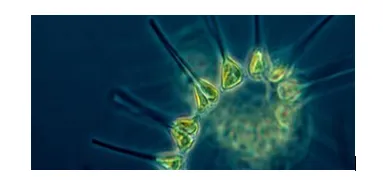
An estuary is a place influenced by river and ocean biomes and contains a mixture of freshwater and saltwater. Estuaries are important habitats and breeding grounds for many organisms. Estuaries branch off into tidal marshes, which are places of tremendous change in water level and temperature. Plants in a tidal marsh have to adapt to changes in salinity. Phytoplankton are important parts of many aquatic food chains.
People depend on rivers for many reasons, such as for transportation, for fishing, for energy, as a water source, and for industrialization. Human activity has polluted many river ecosystems. Growing concern about the environment has led to pressure on the government to monitor and improve the quality of water in rivers and lakes in the United States.
Aquatic Biomes–From Freshwater to Saltwater
Earth’s surface waters do not strictly fall into either fresh or saltwater only. There are transition areas with increasing salinities. Organisms in such aquatic ecosystems have adaptations that allow them to thrive in areas of intermediate salinities.
You’ve followed the river through the watershed from the high elevations near the lake to the low elevations near the ocean. You’re now at a flat area that smells salty and even a little funky. This is an estuary or tidal marsh, a transitional environment between fresh water and salt water that occurs at the mouth of a river where it meets the ocean.
The waters here are brackish, and these zones are nutrient-rich from incoming tides and outgoing water at the river mouth.
Dams across rivers can rob the regions downriver of sediment and nutrients, eventually damaging the estuary. Land surrounding estuaries is vulnerable to the development of homes and roads, which destroys habitat and often creates air, water, and noise pollution.
Estuaries and tidal marshes are part of a broader category of wetlands, areas saturated with water, including marshes, swamps, bogs, and fens. Wetlands provide a number of ecological benefits, such as:
- They are a source of habitat for many different organisms
- They have a high gross primary productivity (GPP)
- They filter waters providing water quality control
- They recharge aquifers
- They provide flood and erosion control
Why have wetlands been lost? They are often part of the commons, as well as subject to negative externalities. Additionally, government policies have not been consistent among different policy areas, such as economics, environment, and planning. For example, Louisiana has lost 15 square miles of coast a year, most of it wetlands. Oil and gas companies have dug 10,000 miles of canals in the wetlands in Louisiana, which has encouraged erosion of the wetlands. Unfortunately, wetlands also serve as buffer zones for hurricanes, so the destruction of wetlands increases the impact of hurricanes on inland areas.
You’ve explored an estuary in your canoe, but now let’s take a look at a swamp.
Global Distribution of Biomes
The Terra satellite, monitored by NASA, holds an instrument called MODIS, the Moderate Resolution Imaging Spectroradiometer. MODIS collects data from Earth’s surface. From this data, scientists from Boston University were able to create maps showing the various locations of biomes across the globe. View the animation of land mapping from the National Oceanic and Atmospheric Administration (NOAA) below:
Each biome has a different impact on the biosphere. Arctic ice in the tundra reflects sunlight back to space and keeps the planet cool. Forests and vegetation found in temperate and tropical rainforests, and photosynthetic marine species found in all aquatic biomes, absorb large amounts of carbon dioxide from the atmosphere.
Unfortunately, the increase in urban areas and croplands, combined with the melting of Arctic tundra, is increasing the amount of surface area on Earth that absorbs heat instead of reflecting it. This, in turn, increases the effects of global warming, rapidly changing Earth’s global climate and the distribution of biomes across the globe.
As biomes disappear due to global climate change and human impact, the natural resources they provide, such as freshwater, lumber, food, and energy sources, become limited. This is the case for many tropical rainforest biomes found in Central America, Mexico, and the Caribbean. They are losing acres of land and the biodiversity of their trees due to the lumber industry. Trees like the big leaf mahogany, high in demand for its lumber, have now made it onto the international trade endangered species list of fauna and flora, according to the World Wildlife Federation.
Similar changes are happening in marine biomes. As ocean warming and acidification increase, and overfishing continues, marine species are disappearing. Changes in many grassland biomes also represent a projected depletion of food resources, as they become drier and drier and less likely to support vegetation.
- Tundra – goes with – Permafrost is frozen year-round; only the top layer partially thaws in the summer.
- Taiga – goes with – A biome of evergreens; it has well-defined seasons, including long, cold winters with snow.
- Temperate Rainforests – goes with – This biome is appreciated for its abundant natural resources, rich soil, and large biomass.
- Savannas – go with – Biome sits at lower elevations; distinguished by a sparse community of trees among their grasses.
- Lakes – go with – Biome known for thermal layering and four main zones categorized by the amount of sunlight each receives.
- Marshlands – goes with – Represents a transitional environment between fresh water and saltwater that occurs at the mouth of a river where it meets the ocean.
Assessment
In this lesson, you studied the biotic and abiotic features of Earth’s six major biomes and subbiomes. You examined the distinctions between various aquatic biomes, including the habitats of coastal, freshwater, and estuary ecosystems. You also discovered some of the climate and seasonal variations affecting Earth’s biomes and the resources they provide.
Biomes Virtual Tour
You have toured (virtually) various terrestrial and aquatic biomes. In this assessment, you will create a virtual tour of a biome of your choice using a slide presentation, a word processing document, a video, a webpage, or a brochure. You may use other available options if approved by your instructor.