

Student Name
Walden University
XR4002 Assignment
Professor Name
Submission Date
[blur_section id=”postinstructions” button=”Free Download” form_id=”fdfac57″]
XR4002 Performance Task Submission Template
PICO Concept Map
Step 1: Nursing Topic of Interest
Of the nursing topics, the topic I’m most interested in is the integration of Barcode Medication Administration (BCMA) in LTC and its effectiveness. This is particularly relevant to my work as I work with older people who are more likely to prescribe themselves medications incorrectly due to multiple medications, declining cognition, and multiple conditions. The goals of BCMA are to increase patient safety by scanning the barcode at the point of service to ensure that the right drug is given. In my experience, in most cases, BCMA can reduce errors and streamline processes, but often staff training, equipment performance, and process implementation are the answer to success. Identifying barriers and facilitators to BCMA implementation will guide the design of optimal implementation strategies to increase the effectiveness and uptake of BCMA in the real-world. Further investigation could lead to the development of training programs and regulations to encourage the use of technology, minimise adverse drug events, and safeguard vulnerable older adults in long-term care facilities, as well as encourage safer prescription practices. Step 2: Concept Map. Ask an ethical research question about the nursing topic/issue you chose: What ethical impact does the implementation of a barcode medication administration system (BCMA) versus traditional medication administration have on medication error rates, patient safety, and the privacy of patient medical information in long-term care facilities? Ethical and Legal Considerations: If there are particular nursing research requirements followed, the use of Barcode Medication Administration (BCMA) Systems for the senior citizens of the long-term care facilities can be conducted ethically and lawfully. This project is intended to enhance patient safety, reduce prescription errors, and maintain patient privacy, which are all part of the ethical principles, such as beneficence, nonmaleficence, autonomy, and justice. The research into BCMA is unlikely to directly cause harm to patients, and the technology is currently used in the clinic, thus adhering to the principles of beneficence and nonmaleficence. In fact, the research aims to discover alternative methods of drug use which can prevent injury. If the research is conducted through observational studies, retrospective chart review, or a survey of the nursing staff, no changes will need to be made regarding the treatment of the patient, and safety will be maintained. Autonomy and privacy might be ensured by de-identifying all information collected and securely storing it and by gaining informed consent when appropriate (e.g., for a survey or an interview with the nursing staff). Of course, patient health information needs to be kept confidential, which is especially important when dealing with vulnerable patient populations such as the elderly. To meet all ethical requirements, this research should be submitted to and approved by an Institutional Review Board (IRB) legally. This would involve, for instance, a formal study protocol which would outline procedures for confidentiality and address any potential risks (where relevant), as well as ensuring that participation is voluntary (where relevant) and that participation is not forced. Special attention should be given to safeguarding the rights of older people living in long-term care homes since their capacity to make decisions may be compromised. However, if the study does not depend upon aggregate outcomes data, or de-identified patient-level data, then direct patient permission can be outside of IRB standards. In conclusion, this study can be conducted responsibly if there is a commitment to federal and institutional regulation, and if there is utilization of nursing ethics. It can be a significant part of evidence-based practice to keep patients safe and not cross over legal and ethical lines. The more often recurring theme in the research is that there is a strong connection between better patient safety outcomes and BCMA systems. Research on BCMA has consistently shown that it is effective in minimizing common medication issues such as incorrect medication dose, patient and missed doses (Callander, 2023). In long-term care, patients are frequently asked to take care of numerous chronic diseases and complex drug regimens. However, being in BCMA isn’t exactly a success, of course. Issues associated with the implementation can outweigh the benefits, such as obsolete or malfunctioning equipment, noncompliance with scanners, and costly procedures. For successful adoption, the technology, workflow, ongoing technical support, and readiness of the organization are key. When the problems aren’t fixed, however, it can make nurses more frustrated, and even lead to workarounds that compromise safety objectives. Human and organizational factors have an impact on the effectiveness of BCMA. The fact that BCMA is a people-oriented system in addition to a technological solution is another crucial lesson learned. Mulac et al. (2021) found in their study that human behaviors, corporate cultures, and the education of nurses impacted the research.
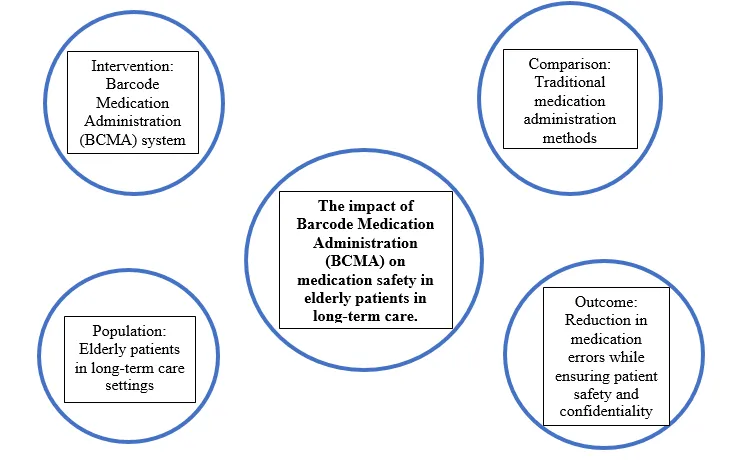
Formulate an ethical research question for the nursing topic or issue you selected:
How does the use of barcode medication administration (BCMA) systems, as opposed to traditional medication administration methods, ethically affect medication error rates among elderly patients in long-term care facilities and guarantee patient safety and privacy of medical records?
Ethical and Legal Considerations:
If certain nursing research requirements are followed, studies on the use of Barcode Medication Administration (BCMA) systems for senior citizens in long-term care institutions can be conducted in an ethical and lawful manner. Enhancing patient safety, reducing prescription mistakes, and protecting patient privacy are all goals of this study that align with fundamental ethical principles including beneficence, nonmaleficence, autonomy, and justice.
Studies investigating the effects of BCMA provide little to no direct danger to patients, and the technology is already used in clinical practice, ensuring both beneficence and nonmaleficence. Indeed, the goal of the research is to find safer drug methods that can prevent injury. Safety would be guaranteed as no changes to patient treatment would be required if the research were conducted using observational studies, retrospective chart reviews, or nursing staff surveys.
Maintaining autonomy and privacy may be achieved by de-identifying and securely storing all collected data, as well as by getting informed permission when required (for example, through surveys or interviews with nursing staff). Maintaining patient health information confidentially requires strict adherence to HIPAA regulations, particularly when it comes to vulnerable groups like the elderly.
In order to comply with all ethical standards, the research would legally need to be submitted to and approved by an Institutional Review Board (IRB). This would include, among other things, establishing a defined study protocol that includes procedures for confidentiality, precautions against potential hazards, and a guarantee that participation (if applicable) is voluntary and not forced. To protect the rights of elderly patients in long-term care institutions, when their ability to make decisions may be impaired, additional measures must be implemented. However, direct patient permission may be exempt from IRB standards if patient-level data is de-identified or if the study uses aggregate outcomes data.
Ultimately, with a commitment to federal and institutional regulation and utilization of nursing ethics, this study can be done responsibly. It has the potential to make a significant contribution to evidence-based practice by enhancing patient safety while ensuring legal and ethical standards.
Step 3: Select Keywords for a Literature Review
- Keyword Combination 1: Elderly Patients, Barcode Medication Administration, and Medication Errors
- Keyword Combination 2: Patient Safety, BCMA System, and Long-Term Care
- Keyword Combination 3: Confidentiality, Older Adults, and Electronic Medication Administration
Step 4: Conduct a Literature Search
Reference in APA format | Method Used | Purpose of Study | Sample Used | Summary of Article |
Grailey, K., Hussain, R., Wylleman, E., Ezzat, A., Huf, S., & Franklin, B. D. (2023). Understanding the facilitators and barriers to barcode medication administration by nursing staff using behavioural science frameworks. A mixed methods study. BioMed Central Nursing, 22(1), 1–12. https://doi.org/10.1186/s12912-023-01382-x | Semi-structured interviews and behavioral frameworks are used in this qualitative study | To investigate behavioral determinants that impact nurses’ use of BCMA in clinical practice | 22 nurses from different UK hospital wards | The study found significant hurdles (poor ergonomics, workarounds) and facilitators (training, simplicity of use) to the adoption of BCMA. Although nurses acknowledged the benefits of safety, many cited system inefficiency and culture as obstacles. |
Yu, W.-N., Cheng, Y.-D., Hou, Y.-C., & Hsieh, Y.-W. (2024). Implementation of medication-related technology and its impact on pharmacy workflow: A real-world evidence study from 2017 to 2023 (preprint). Journal of Medical Internet Research. https://doi.org/10.2196/59220 | Mixed-methods research that uses surveys and observational data | To determine the impact of BCMA-integrated system implementation on pharmacy workflow, usability, and drug safety | Five hospital departments with 105 clinical staff members. | The study found that BCMA systems reduced disruptions and improved drug verification accuracy, but it also emphasized the necessity of infrastructure support and training. |
Meginniss, A., Coffey, C., & Clark, K. D. (2024). Simulated medication administration for vulnerable populations using scanning technology: A quasi-experimental pilot study. BMC Nursing, 23(1). https://doi.org/10.1186/s12912-024-02248-6 | Quasi-experimental pilot study | To analyze the influence of QR/barcode scanning on nursing students’ accuracy and decision-making with medication administration | 36 final-year nursing students in a simulated care environment | While scanning technology was found to promote better critical thinking and patient identification skills, the study did not show a general decrease in drug mistakes when compared to standard techniques. |
Barakat, S., & Franklin, B. D. (2020). An evaluation of the impact of barcode patient and medication scanning on nursing workflow at a UK teaching hospital. Pharmacy, 8(3), 148. https://doi.org/10.3390/pharmacy8030148 | Observational study with comparative data analysis | To determine how barcode scanning for patient and medication IDs impacts nursing workflow effectiveness and safety | Two hospital wards (BCMA ward vs. non-BCMA ward) in a teaching hospital | The study showed reduced omission errors, better drug scheduling, and patient identification verification. However, gadget availability and scanning time delays were noted as operational problems. |
Step 5: Key Takeaways
BCMA Significantly Enhances Patient Safety but Requires Strategic Implementation
The close connection between improved patient safety results and BCMA systems is one of the recurring themes in the research. Research consistently shows that BCMA lowers common pharmaceutical mistakes, such as missed doses, incorrect patient, and incorrect dosage (Callander, 2023). This is particularly true in long-term care facilities, where elderly patients frequently deal with a variety of chronic conditions and challenging drug schedules. However, success is not synonymous with BCMA presence alone. The benefits may be outweighed by implementation problems, including outdated or malfunctioning equipment, inadequate scanner compliance, and labor-intensive procedures. Strong technology, effective workflow, ongoing technical support, and organizational readiness are necessary for successful adoption. If these issues are not resolved, the system may cause nurses to grow frustrated and may even lead to workarounds that jeopardize safety objectives.
Human and Organizational Factors Influence BCMA Effectiveness
The fact that BCMA is a people-oriented system in addition to a technological solution is another crucial lesson learned. A study by Mulac et al. (2021) demonstrated how human behavior, corporate culture, and nursing education affect how well BCMA is implemented. The system will succeed or fail based on nurses’ opinions about BCMA, how easy it is to use, and whether a company encourages reporting mistakes in a non-punitive manner. Inadequate training, unclear procedures, and fear of punishment were cited as the main obstacles. This bolsters the need to cultivate an organizational culture that values learning and helpful work practices, where technology is seen as an adjunct to nursing care rather than a replacement.
Technological Integration Impacts Nursing Roles and Patient Interaction
Finally, there is a subtle shift in nursing practice with the introduction of BCMA and related tools, including electronic drug administration records (eMARs). Although these tools help nurses to be more accurate and accountable, some studies revealed that nurses felt their work was less patient-centered and more administrative (Karnehed et al. 2021). The effective use of technology alongside the quality of care, including patient participation and emotional support, is increasingly a focus area. The functional part of the system is to be given the first priority for future research and development of the computer system, so that the nurses can get the benefit from the computer system as efficiently and safely as possible and, on the other hand, have meaningful interaction with patients.
Synopsis
By conducting this investigation, I was able to gain a deeper insight into the way in which the BCMA system operates in the long-term care environment, both technologically and humanistically. Indeed, evidence indicates that the use of BCMA could significantly minimize the risk of medication errors and improve patient safety – however, the extent of this benefit depends heavily on the adoption, support and promotion of BCMA by the nursing workforce and healthcare organizations. To be able to make informed observations and analysis of practice in practice, we focused on the importance of choosing keywords for searching the databases, quantitative and qualitative data synthesis, and the use of contemporary, open-access research.
The first topic, “BCMA Improves Safety When Properly Implemented,” was highly supportive of the idea that technology should be strategically integrated. Several articles have found that the use of BCMA can decrease errors such as missed prescriptions, errors in dosage, and patient errors (Yu et al., 2024). But its effectiveness is diminished with disobedience, old equipment, and poor training. If more specific results are desired in subsequent research, then the following terms can be used: BCMA implementation hurdles, BCMA compliance in long-term care.
The second topic, “Human and workplace Factors Influence BCMA Success”, is important, as a learning culture and non-punitive culture is essential. Define and document the necessary steps required for the successful implementation of a BCMA program: lack of workflow integration and fear of repercussions prevent mistakes from being reported and/or hasten the adoption of a BCMA program. From this, I learned to consider additional terms that could be incorporated into the adoption process in the future, such as: corporate culture, drug safety, nurse impression of the BCMA, etc., which may be useful qualitative data sources.
A new conflict between digital efficacy and human touch was highlighted by the third subject, “Technological Integration Shifts Nursing Roles.” While eMARs and BCMA enhance accountability and documentation, they may take nurses’ emphasis away from providing holistic, person-centered care. Additional search terms I’ve thought of for the literature search in the future include “eMAR effect on nursing care” and “technology and patient-centered care in geriatrics.
Overall, this technique helped me to develop a clear and ethical research question with the PICOT format and to identify suitable keywords for my search to yield relevant results. Going forward, I will also try to include more mixed-methods research in my future searches to gain insight into the conclusions and experiences of patients and health care providers.
[/blur_section]